Khemet · c. 3000 BCE
Thoth
The Measure
Scribe of the gods, keeper of weights. He taught that to know a thing is to measure it against the truth — and that the heart is the only organ light enough to weigh.
Before the wheel, before the wire, before the word made of light — there was the body: the first instrument issued to us, and the last we will ever lay down.
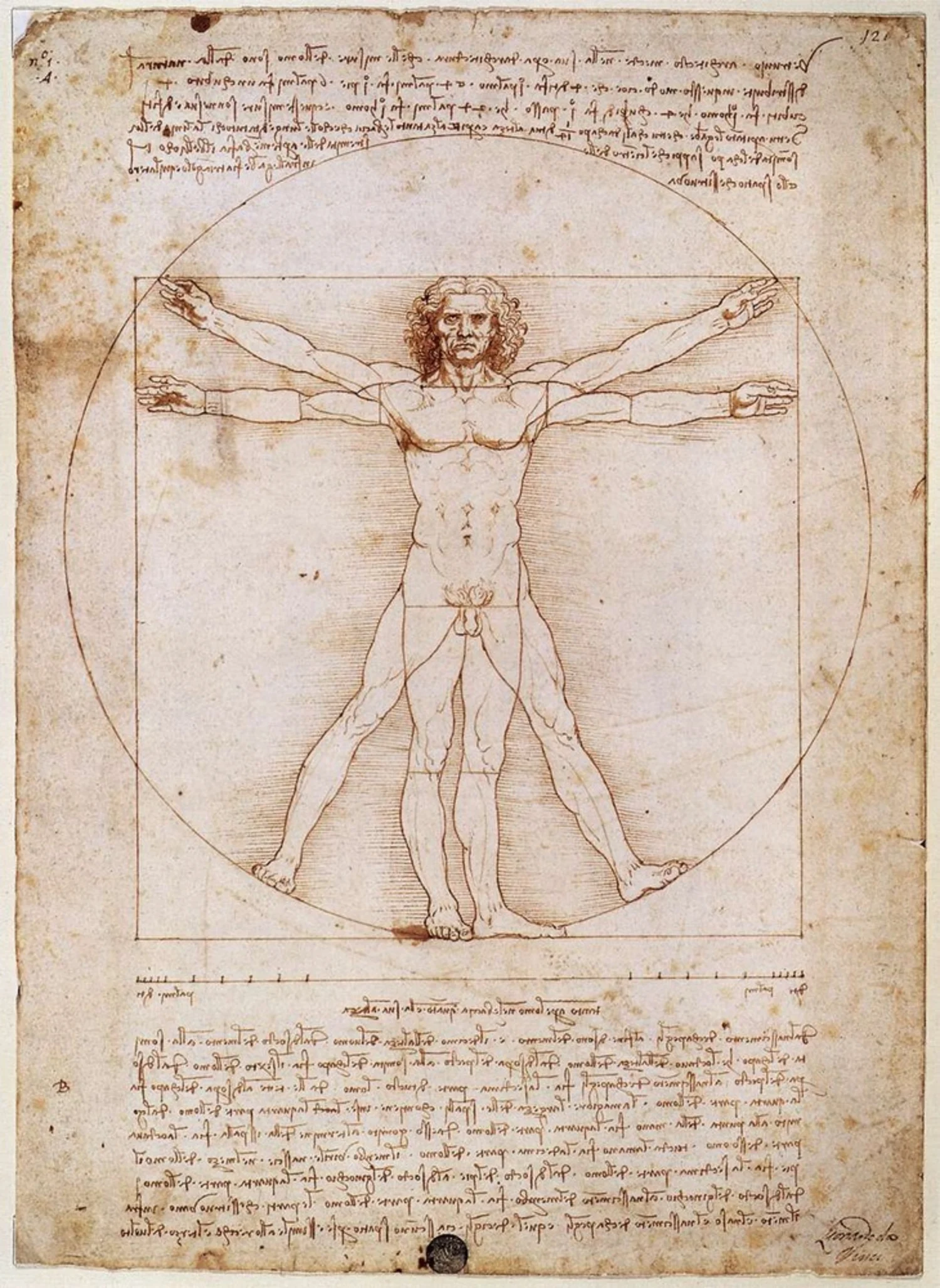
Incipit · Here begins the book of the body
The body is the oldest machine still running. It was engineered before the engineers, written before the alphabet, and it has never once asked our permission to continue. We have learned to call our newest tools technology — the lever, the lens, the engine of reasoning made of light. Yet each is a faint imitation of an apparatus we were issued at birth and have scarcely read the manual for.
Five keepers of the old knowledge understood this. In Khemet, Thoth weighed the heart against a feather and called the result justice, and Imhotep raised the first temple in stone and bound healing to the sacred. In Hellas, Sophia named the wisdom that builds the frame and then dwells inside it. In Florence, Leonardo opened the body with a pen and found, in place of meat, a cathedral of proportion. And in our own age, Jung descended beneath waking awareness to chart the symbols the body and soul still share. They were not studying biology. They were reading the first technology — and they left their notes in the margins for us.
The body is not a thing you have. It is the instrument through which everything else is had. — from the Codex
Argument in Five Hands
Wisdom, Knowledge, Anatomy, Healing, and Consciousness — five pillars of the one body.
Scribe of the gods, keeper of weights. He taught that to know a thing is to measure it against the truth — and that the heart is the only organ light enough to weigh.
Architect of the first temple in stone and the first physician named in history. He bound medicine to the sacred — treating the body as the dwelling that healing and devotion together keep.
Wisdom personified, older than the world she helped to order. She is the breath that makes the clay stand up, and the intelligence already folded into its design.
Painter, anatomist, engineer. He dissected thirty bodies to prove a single thesis: that the human frame is built to the same ratios as the temple, the circle, and the cosmos.
Physician of the soul. He charted the depths beneath waking awareness — symbol, shadow, and the Self — and showed that body and psyche speak a single language in two tongues.
Egypt never divided the sacred from the exact. The same priesthood that embalmed the dead also set the cubit — and the cubit was taken from the body: the length of the forearm, elbow to fingertip. Measurement began as anatomy. The world was first ruled in units of man.
Thoth, ibis-headed, presided over the scale. In the hall of judgment the heart was laid against the feather of Ma'at, and truth was weighed as a physical quantity. The lesson beneath the myth is severe and entirely modern: the body keeps an honest ledger. It records what is taken in and what is spent, and at the end the account is read back, exactly, with nothing forgiven and nothing lost.
As above, so below; as the heavens are ordered, so the body. — Tabula Smaragdina, attributed to Hermes Trismegistus
Before he was a god, Imhotep was an architect and a physician — the first of either whose name history bothered to keep. He raised the step pyramid at Saqqara, the first monument cut entirely from stone, and he wrote, in what survives as the Edwin Smith papyrus, of wounds examined and treated by observation rather than spell alone. In him the temple and the clinic were the same building.
This is the lesson the later ages mislaid: that healing is not the repair of a machine but the keeping of a dwelling. The body is the house the spirit is lent, and to mend it is an act of devotion as much as of skill. Imhotep treated the flesh as sacred infrastructure — the ground that all higher work is built upon — and was remembered, in the end, not as a builder of tombs but as a giver of life.
Thou shalt examine the wound, and thou shalt reckon with that which thou findest. — after the Edwin Smith Papyrus
The Greeks gave the indwelling intelligence a name. Sophia — wisdom — is not knowledge acquired but knowledge built in: the order present before the maker begins, the pattern the clay already obeys. To those who came after, she was the breath that descended into matter and woke it.
Here the body becomes a temple, and not as a figure of speech. Pneuma — breath, spirit, the very same word — is the operating principle: invisible, continuous, the whole difference between an animate frame and an anatomical one. You do not so much possess this technology as receive its consent, breath upon breath, to go on running you. Withdraw the breath and the instrument is only its diagram.
Wisdom has built her house; she has hewn her seven pillars from living bone. — after Proverbs IX
Eighteen centuries after Thoth's scale, a left-handed Florentine took the old intuition and made it exact. Leonardo cut into the dead to draw the living, and what his pen uncovered was not chaos but architecture — valves like engineered doors, chambers, hinges, the body squared and circled at once.
The Vitruvian figure is that thesis set in ink. A man inscribed in both circle and square — the two perfect figures the ancients could never quite reconcile — is the claim that the human form is the unit in which they finally agree. The body is the measure where heaven's circle meets earth's square.
Three thousand years after Khemet weighed the heart, a physician in Zürich went looking for the soul again — and found it had never left the body. Carl Jung mapped the depths beneath waking awareness: the shadow, the symbol, the archetype, and the slow work of becoming whole he called the Self. What the old schools drew as gods and demons, he read as the figures of a single psyche seeking its own integration.
His decisive discovery, for a codex of the body, was that flesh and psyche speak one language in two tongues. The symptom and the symbol rhyme; the dream and the disease draw on the same store of images. To attend the body, then, is already to attend the soul — and consciousness is not a thing the brain secretes but a marriage the whole organism is always trying to make.
Who looks outside, dreams; who looks inside, awakes. — C. G. Jung
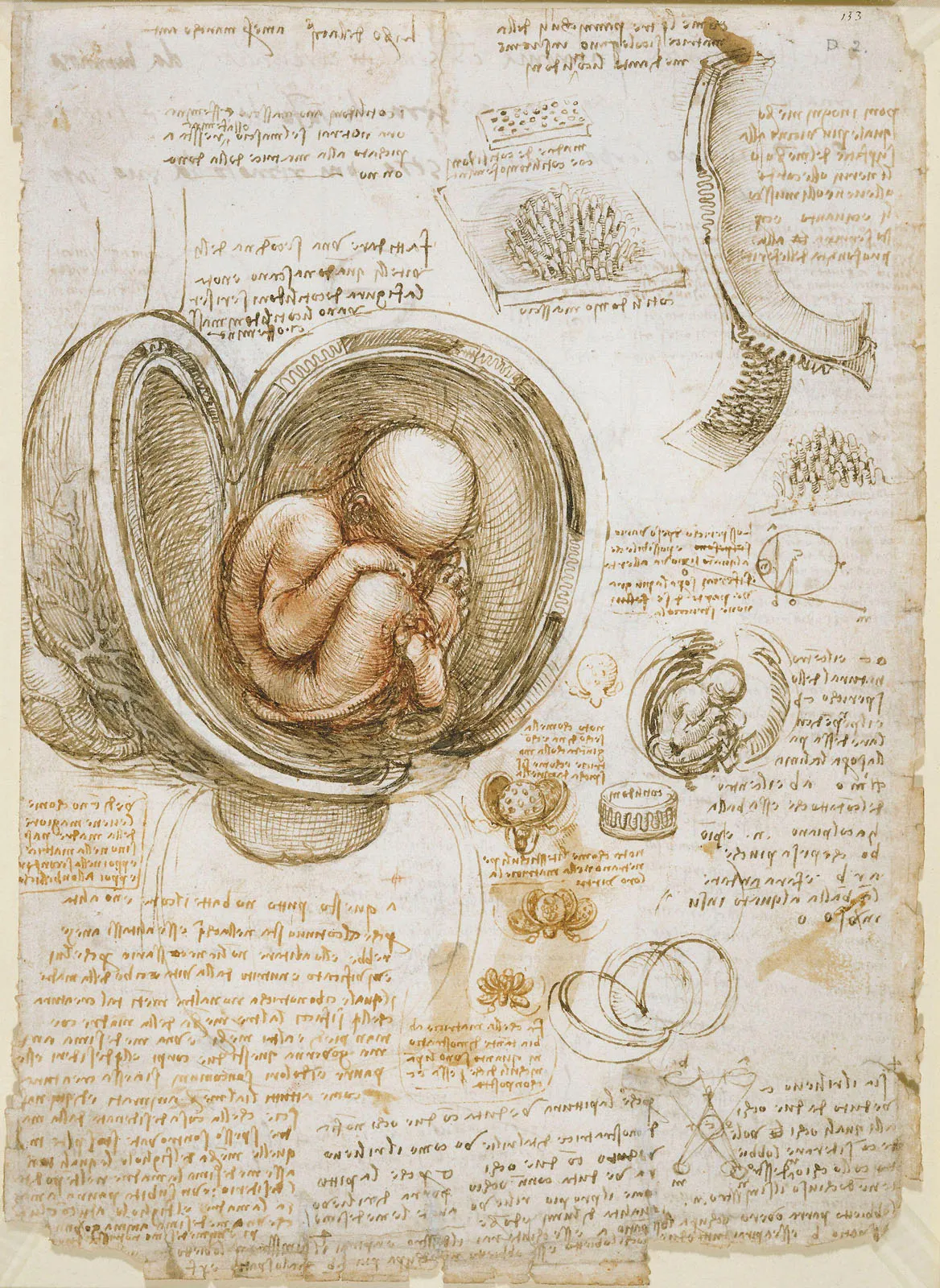
No engineer attends this construction. The body writes its own body — folding a nervous system, plumbing a heart, rehearsing breath in a chamber that holds no air. Leonardo drew it not to explain it, but to stand before it: the oldest technology, quietly building the next.
You are holding the instrument that reads this. It is older than every tool it has ever made.
De Corpore · The Technology of BODY
Plates drawn after Leonardo da Vinci · Royal Collection, Windsor
Set in Cormorant Garamond, EB Garamond & IM Fell English